
01 /
The need behind the project
Device details, technician visits and warranty terms can become scattered across paper and messages. Access needs to be simple without making a QR sticker an open door to a customer’s private records.
02 /
How we approached it
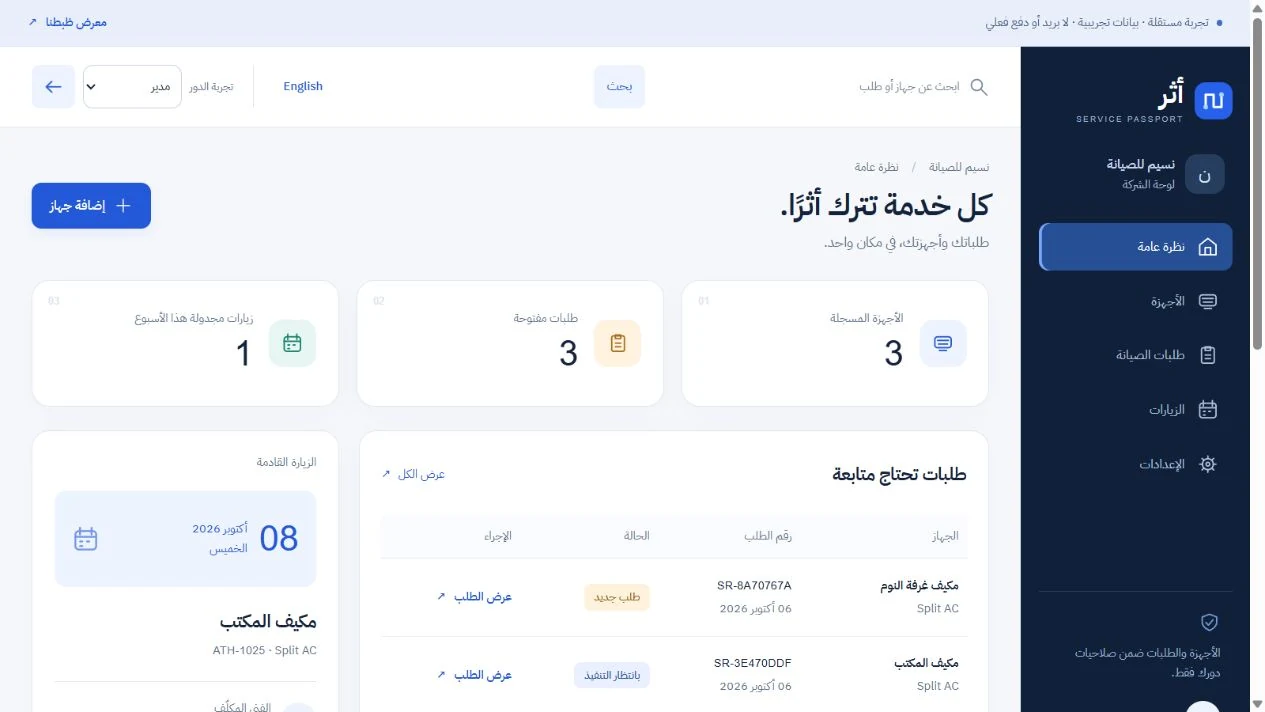
We developed an independently branded product with company and customer workspaces, separating public QR landing pages from private records and using revocable temporary access codes. Buyer installations can be independent.
03 /
Implementation and features
- Arabic and English, RTL/LTR, with mobile layouts for technicians on visits.
- Device creation, service data and device-specific warranty terms.
- Downloadable PNG QR labels for printing and scanning.
- Service requests, technician assignment, planned visits and status tracking.
- Saved service logs, request timelines and authenticated text exports.
- Manager and technician roles with scoped customer record access.
- Temporary access codes, revocation and QR rotation when required.
- Editable company identity and an independent database and file installation.
04 /
Explore the workflow
Open the company demo, create a sample device, request and service log, then explore the customer passport and record download. Use synthetic information only.
Try the demo ↗What this presentation covers
Athar is our own demonstration product, not a client-success claim. Demo data is isolated and temporary. It sends no real messages or payments and is not a multi-company SaaS manager. Simplified role switching belongs only to demo mode; live installations have separate setup and authentication.
05 /
Who it suits
Maintenance companies, equipment service providers and after-sales teams.
Customization and handover
We agree your branding, languages, roles, reports and integrations, then define scope, testing and handover. Presenting this project does not offer its customer data, accounts or brand for sale.
Presentation reviewed: 17 October 2026